
Acrylic vs Watercolor vs Gouache: Which Medium Is Right for You?
If you're just getting into painting, one of the first big decisions you'll face is: which medium do I even start with? Acrylics, watercolors, and gouache are all popular choices, and they all look beautiful in the right hands. But they work very differently, and understanding those differences can save you a lot of frustration early on.
Let's break it down in plain language.
The Quick Overview
| Property | Acrylic | Watercolor | Gouache |
|---|---|---|---|
| Base | Water-soluble polymer | Water and gum arabic | Water, gum arabic, and chalk |
| Finish | Glossy to matte (varies) | Transparent, luminous | Flat, opaque matte |
| Opacity | Semi-opaque to opaque | Mostly transparent | Fully opaque |
| Dry time | Fast (10 to 20 mins) | Fast, varies with layers | Fast (similar to watercolor) |
| Reworkable? | No (once dry, permanent) | Yes (can re-wet and lift) | Partially (re-wets when damp) |
| Best surface | Canvas, board, paper | Watercolor paper | Watercolor paper, illustration board |
| Beginner-friendly | Very | Moderate | Moderate |
Acrylic Paints
Acrylics are probably the most forgiving medium for beginners, and that's one reason they're so popular. You can paint over mistakes once the layer dries, you can thin them with water or medium to get different effects, and they work on almost any surface.

The colors are vibrant and dry to a permanent, water-resistant finish. That means you can layer colors without them bleeding into each other. For landscape painting or bold, graphic artwork, acrylics are a great first choice.
Best for: Beginners, canvas painting, bold colors, mixed media work
Watch out for: They dry fast, so colors on your palette can harden if you're not working quickly. Keep a spray bottle of water nearby.
Watercolor Paints
Watercolors are the most portable and lightweight painting medium. They're made for transparent, layered effects where the white of the paper shows through to create luminosity. That's exactly what makes them magical, and also what makes them challenging.

Because you're working with transparent layers, mistakes are harder to hide. If you go too dark, you usually can't fully cover it. But watercolors are also forgiving in a different way: you can re-wet dried paint and move it around, soften edges, and lift color out with a damp brush.

Best for: Landscapes, portraits, illustration, travel sketching
Watch out for: Paper matters a lot. Regular printer paper will buckle and distort. You need proper watercolor paper (at least 200 GSM) to get good results.
Gouache
Gouache is watercolor's thicker, more opaque cousin. It shares the same base but has chalk or white pigment added to make it opaque. This means it dries to a flat, matte finish and fully covers what's underneath.
It's popular with illustrators, designers, and fashion artists because of its flat, graphic look. You can paint light colors over dark ones, which you can't easily do with regular watercolors.
Best for: Illustration, graphic artwork, dark backgrounds, opaque layering
Watch out for: Dried gouache can crack if applied too thickly. And unlike acrylics, it can re-wet even after it's fully dry, so finished pieces need careful handling.
Which One Should You Start With?
Honestly? It depends on what kind of art you want to make.
- If you want to paint on canvas and love bold, colorful artwork, start with acrylics. They're the most forgiving and versatile for beginners.
- If you love the look of soft, dreamy paintings with light and transparency, try watercolors. The learning curve is a bit steeper, but the results are beautiful.
- If you're into illustration, flat design, or graphic art, gouache might be exactly what you need.
And you don't have to pick just one forever. A lot of artists use all three depending on the project.

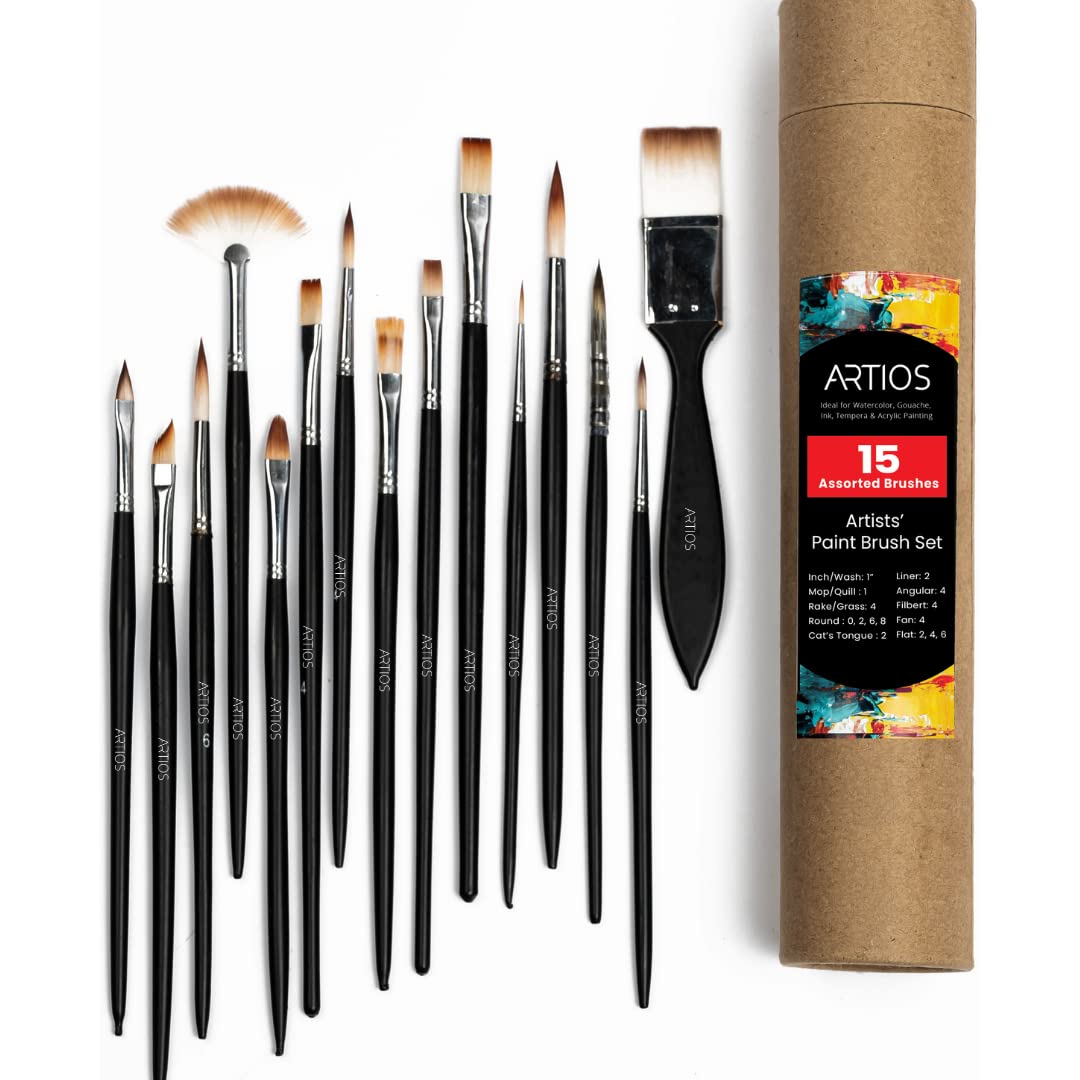
If you want to try multiple mediums without buying everything separately, the ARTIOS Painting Kits are a good starting point. They include acrylic colors, watercolor papers, and brushes so you can experiment and see what clicks for you.
A Note on Surfaces
One thing that often gets overlooked: the surface you paint on matters just as much as the medium.
- Acrylics work best on canvas or primed surfaces. Canvas boards are a great affordable option.
- Watercolors need proper watercolor paper (cold press is the most popular for beginners).
- Gouache works on watercolor paper or illustration board. It can also be used on colored or black paper, which is one of its best features.
If you want to dig deeper into choosing the right paper, check out our guide: Understanding Art Papers: GSM, Types, and How to Choose.