

Complete Guide to Acrylic Painting for Beginners
Acrylic painting is one of the most forgiving and exciting mediums you can pick up. For an absolute beginner, or anyone who has been curious about painting for years, acrylics are the best place to start. They're water-based, they dry fast, and they work on almost any surface. Plus, if you make a mistake, you can just paint over it once it dries.
This guide covers everything you need to know to get started, from what supplies to buy to your first techniques and common beginner mistakes to avoid.
Why Acrylics Are Perfect for Beginners
If you're deciding between oils, watercolors, or acrylics, here's the honest answer: acrylics are the most forgiving of the three.
- Fast drying: Acrylics dry in minutes, not days. You can rework a painting in the same session.
- Water cleanup: No solvents, no turpentine. Just rinse your brushes with water.
- Versatile: Thin them down to paint like watercolors, or apply thick like oils. They adapt to your style.
- Works on most surfaces: Canvas boards, paper, wood, fabric. Acrylics stick to almost anything.
- Affordable: Good quality acrylic paints cost a fraction of oils.
What Supplies Do You Actually Need?

You don't need everything at once. Here's what matters when you're starting out.
Paints
Start with a basic set of 6 to 12 colors. You can mix almost any color from a good set of primaries (red, blue, yellow) plus white and black. ARTIOS 10ml acrylic jars are a solid starting point, affordable, well-pigmented, and consistent batch to batch.
Brushes
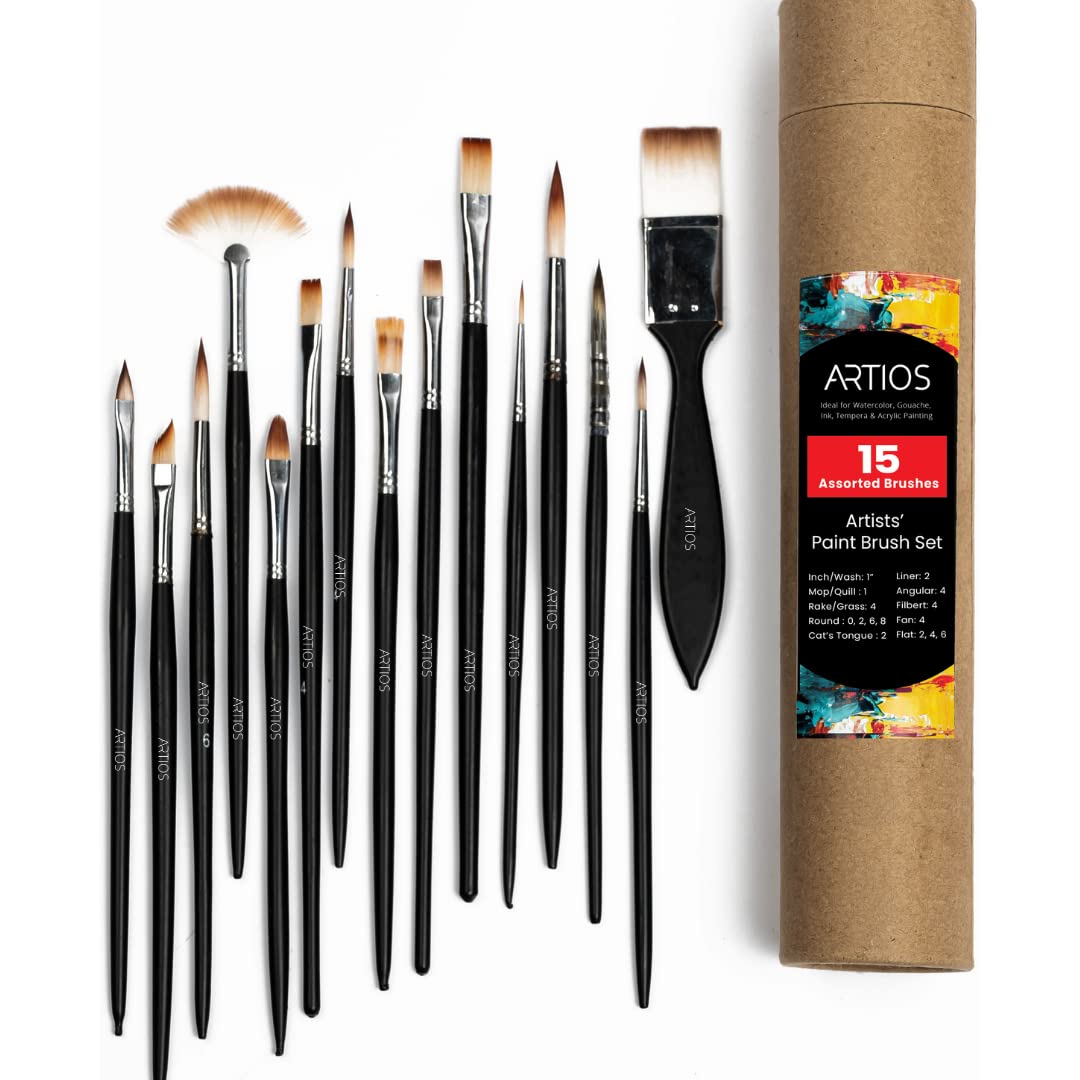
You need fewer brushes than you think. A round brush for detail, a flat brush for filling areas, and a medium wash brush will cover 80% of what beginners need. A set of 7 assorted brushes is ideal to start.

Surface
Canvas boards are the go-to for acrylic beginners. They're affordable, easy to store, and come in many sizes. Look for double-primed cotton canvas boards. Avoid regular sketch paper, which buckles and bleeds with acrylics.
Palette
A wooden palette or ceramic plate works fine. Acrylics dry fast, so don't squeeze out too much at once.
Water containers
Two jars, one for rinsing your brush, one with clean water for thinning paint. Change them when the water looks dark.
Basic Acrylic Techniques to Try First

Flat Wash
Dilute your paint with a little water and apply it in even horizontal strokes. This is how you fill a background quickly and evenly.
Dry Brushing
Load a small amount of paint on a dry brush, wipe off the excess, and drag it lightly across the canvas. This creates a rough, textured effect, great for grass, hair, or wood grain.
Wet on Wet Blending
Apply two colors next to each other while both are still wet, then blend where they meet with a clean brush. Acrylics dry fast, so work quickly.
Impasto
Apply thick, undiluted paint directly with a brush or palette knife. This creates texture and dimension. Sunsets, ocean waves, and florals look fantastic with this technique.
Glazing
Once a layer is dry, apply a thin transparent wash of a different color over it. This builds depth and luminosity, brilliant for skies and shadows.
Setting Up Your Workspace
You don't need a dedicated studio. A kitchen table with old newspaper or a plastic sheet works perfectly. Make sure you have good light, something to protect your surface, and paper towels for wiping brushes.
Common Beginner Mistakes
- Using too much water: A little is fine, but flooding your paint breaks down the binder and the paint won't adhere properly.
- Not cleaning brushes immediately: Acrylics dry hard. If you let a brush dry with paint in it, the bristles are ruined. Rinse between every color change.
- Painting too dark too fast: Build up layers gradually. Start lighter, then add shadows and details on top.
- Working on the wrong surface: Regular printing paper buckles. Use proper canvas boards or mixed media paper that can handle moisture.
What to Paint First
Keep it simple. A single flower, a fruit bowl, a sunset with a few clouds. The goal isn't to create a masterpiece on day one. It's to get comfortable with the medium. Loose, expressive painting is more fun and less stressful than trying to be precise from the start.
Ready to Start?
If you want everything in one box, the ARTIOS Painting Kits include brushes, acrylic colors, canvas boards, papers, and an easel. Or browse our brush sets, canvas boards, and palettes to build your own setup.