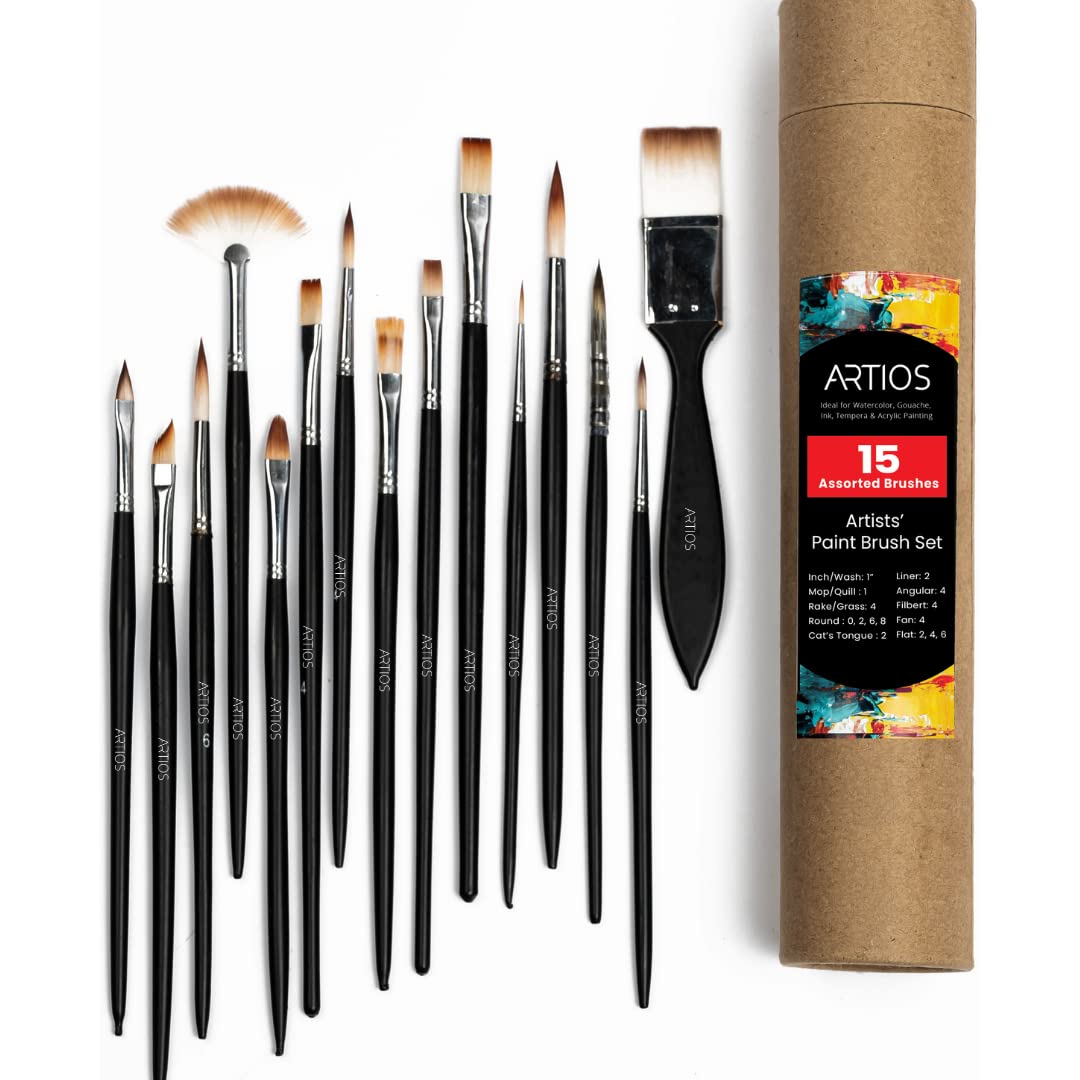


How to Choose the Right Paint Brushes
Walk into any art store and the brush section can feel overwhelming. There are hundreds of sizes, shapes, and materials, and most beginners end up buying the wrong ones. This guide breaks down exactly what each brush type does, how to read brush sizes, and what to look for in a quality brush.
The Parts of a Paint Brush

Before diving into types and sizes, it helps to understand what a brush is made of:
- Bristles (Head): The part that holds and applies paint. The shape, length, and material determine how the brush performs.
- Ferrule: The metal band connecting bristles to handle. A tight ferrule means no shedding. Loose ferrules are a sign of poor quality.
- Handle: Longer handles give more control from a distance. Shorter handles work well for detail work up close.
Brush Shapes and What They're For
Round
The most versatile brush in any set. A pointed round can do fine lines at the tip and fill larger areas with the side of the bristles. Great for portraits, botanical illustrations, and general painting.
Flat
Squared-off bristle tips. Brilliant for filling large areas evenly, creating sharp edges, and flat wash techniques. The edge also makes thin, precise lines.
Filbert
A flat brush with an oval tip. The curved edge makes blending easy and leaves softer edges than a flat brush. A favorite for portrait painters and anyone who wants natural-looking strokes.
Angular
An angled flat brush. The slanted tip lets you get into corners precisely, excellent for chisel strokes, lettering, and fine curved lines.

Fan
A brush spread out like a fan. Perfect for blending, creating grass and foliage textures, and softening edges.
Mop
A large, round, fluffy brush that holds a lot of water and paint. Mops are the go-to for watercolor washes, laying down large areas of color effortlessly. Also great for softening backgrounds in acrylics.
Liner (Rigger)
A very thin round brush with long bristles that hold enough paint to draw continuous fine lines without reloading. Brilliant for tree branches, rigging on boats, and fine detail work.
Wash
A very wide flat brush for painting large areas quickly. Landscape painters use these constantly. Also great for dampening paper before a watercolor wash.
Understanding Brush Sizes
Brushes are numbered and the system is simple once you get it:
- Higher numbers = larger brushes
- Lower numbers = smaller, finer brushes
- Sizes with /0 (like 2/0, 3/0) are miniature detail brushes. The more zeros, the finer the tip.
A Size 0 round is great for detail. A Size 12 is large and holds lots of paint. A 2/0 is extremely fine, used for micro-detail like eyelashes or intricate patterns.
Synthetic vs Natural Bristles

Synthetic bristles (nylon or polyester) are great for acrylic painting. They're cruelty-free, durable, spring back into shape, and don't get damaged by acrylic paint.
Natural bristles (sable or hog hair) are traditionally used for oil painting and watercolor. They're softer and more absorbent, but more expensive and need more care.
For beginners painting with acrylics or watercolors, high-quality synthetic brushes are the right call. They perform well, last long, and cost much less.
What Makes a Quality Brush?

- Bristles that spring back after each stroke
- A tight ferrule that doesn't shed or wobble
- A smooth, comfortable handle that doesn't split
- A clean point or edge (round brushes should come to a fine point)
Which Brushes to Buy First?
If you're starting out, here's the honest minimum: 1 medium round (Size 4 or 6) for most of your painting, 1 flat (Size 6 or 8) for backgrounds and fills, 1 small round (Size 0 or 1) for details, and 1 wash brush for large areas. A set of 7 to 8 assorted brushes covers all of this.
How to Care for Your Brushes
- Never let acrylics dry in the bristles. Rinse immediately after use.
- Reshape bristles with your fingers while still wet
- Store brushes upright or flat, never bristle-side down in a jar
- Wash with mild soap and water after every painting session
- Never leave brushes soaking in water. The handle swells and the ferrule loosens.
Explore the full range of ARTIOS paint brush sets, round sets, flat sets, mop sets, and assorted kits, all cruelty-free and handmade in India.