

Miniature Painting for Beginners: Brushes, Techniques, and Getting Started
Share
Miniature painting is one of the most satisfying art forms for people who enjoy detail work. It covers figurines for tabletop games, tiny botanical illustrations and hyper-detailed portrait studies, and the craft is specific and rewarding once you get the hang of it.
This guide covers what you actually need to get started, which brushes matter most, and how to build the skill properly.
What Is Miniature Painting?
Miniature painting means painting very small subjects with high levels of detail. This includes tabletop gaming figures (like 28mm scale Warhammer or D&D figurines), fine botanical illustration, portrait miniatures on small boards, and detailed decorative painting on small objects like boxes or ceramics.
What these have in common is the need for precise brushwork, controlled paint consistency, and patience. The good news is that steady hands and brush control improve quickly with practice. Most beginners see noticeable improvement within 5 to 10 sessions.
The Most Important Tool: Your Brushes
In miniature painting, brushes matter more than almost any other supply. A poor quality brush with a blunt or split tip makes it nearly impossible to place paint exactly where you want it. A high-quality detail brush with a fine, consistent point makes the same work feel natural and controlled.
What to look for in a detail brush:
- A sharp, fine point: The tip should come to a single, consistent point when wet. This is non-negotiable for detail work.
- Bristles that hold a small amount of paint: Brushes that are too large carry too much paint and lose control quickly. Sizes 0, 1, and 2 are your core miniature sizes.
- Good spring: Bristles should return to their original shape after each stroke. A limp brush is difficult to work with at this scale.
- No shedding: A single loose bristle in a miniature painting can ruin hours of work. Check for a tight ferrule.
Which Brush Sizes Do You Need?
For miniature painting, you'll primarily use:
- Size 3/0 and 2/0: Extremely fine, for the smallest details like eyes, eyelash lines, and intricate patterns.
- Size 0 and 1: Your workhorses for most detail painting, fine edges, highlights, and small surface areas.
- Size 2 and 3: For slightly larger surface areas, basecoating smaller figures, and mid-size detailing.
A dedicated set of 10 to 13 miniature detail brushes covering these sizes gives you everything you need to start and progress properly.
Paint Consistency Is Everything
In miniature painting, paint that's too thick clogs fine details and looks lumpy. Paint that's too thin loses opacity and looks washed out and transparent. You're aiming for a consistency that flows smoothly off the brush tip but covers evenly in one or two coats.
A useful test: thin your paint until it has the consistency of warm milk. If it's thicker than that, add one drop of water at a time. If it runs off your brush freely like water, it's too thin.
The Layering Approach
Miniature painting is almost entirely done in layers. You start with a basecoat, a flat mid-tone that covers the entire surface area. Then you add shadows by applying darker paint into the recessed areas, and highlights by applying lighter paint to raised surfaces and edges. The result is a three-dimensional, lifelike appearance even on a very small surface.
Each layer needs to dry fully before the next. Rushing layers creates muddy, overworked paint that loses definition.
Practical Tips for Getting Started
- Work under good light: A daylight LED lamp is essential for detail work at this scale. Painting under warm yellow light misrepresents your colors.
- Hold your figure, not the brush: Use a cork, a small jar lid, or a purpose-made handle to hold the figure. Rest your painting hand on a stable surface to reduce shake.
- Thin your paints: Most beginners apply paint too thick. Always thin each color before loading your brush.
- Use a wet palette: A wet palette keeps paint workable for much longer and prevents waste from paint drying between uses.
- Don't rush the drying time: Patience between layers is the single most important habit to build early.
What to Paint First
Don't start with a face or an intricate pattern. Start with a simple geometric object, a cube or a cylindrical shape, and practice placing highlights and shadows in the right places. Then move to a small figurine with large, flat surface areas. The goal of early sessions is learning how paint behaves at small scale and building brush confidence.
After a handful of practice sessions, the brush starts to feel natural and detail placement gets noticeably easier.
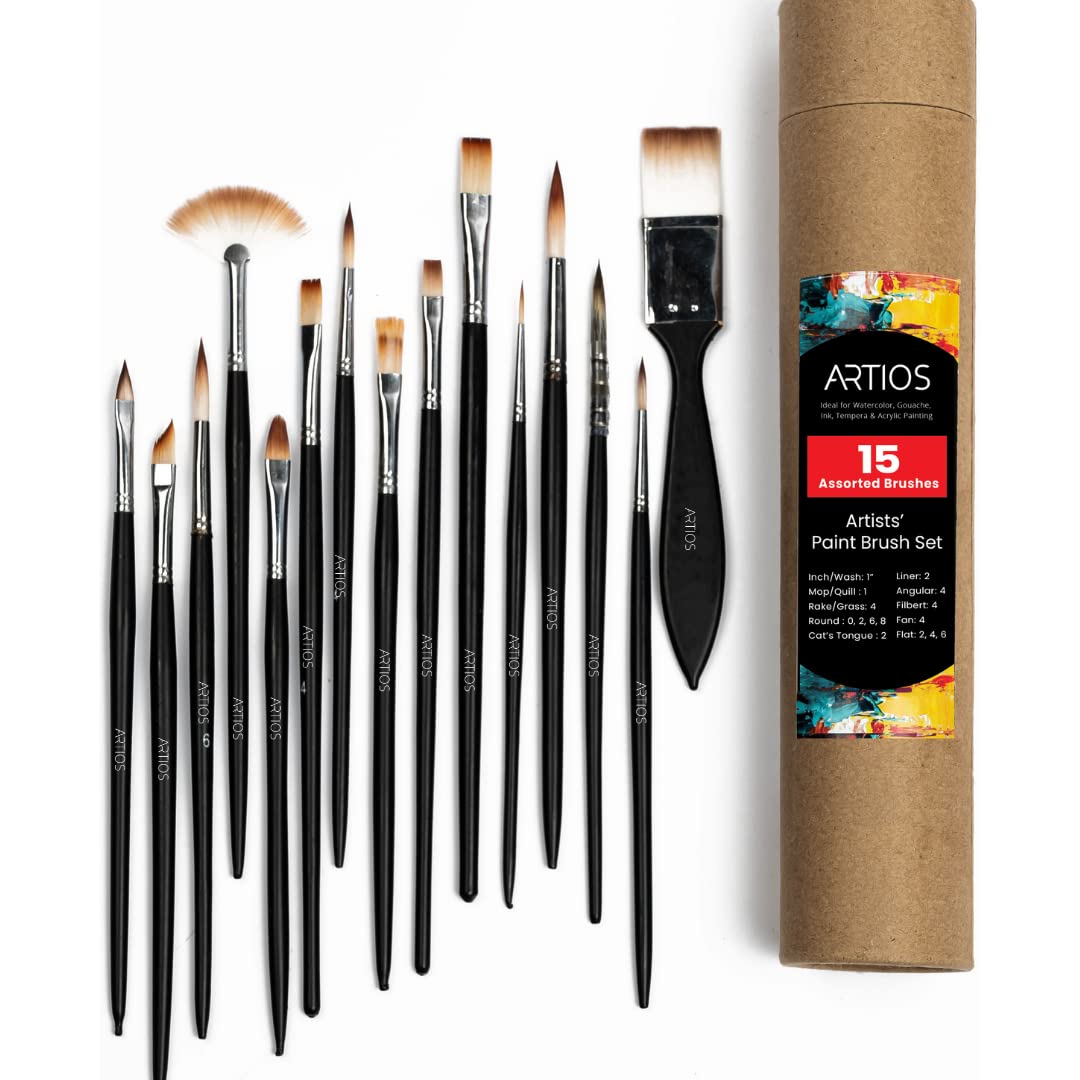
Browse the ARTIOS detail and miniature brush range, including fine tip sets designed specifically for small-scale and detail work, with sharp synthetic bristles and wooden handles.