

Mop Brushes for Watercolor: What They Are and How to Use Them
Share
If you've been painting with watercolors for a while, you've probably heard about mop brushes. And if you haven't tried one yet, you're in for a surprise. A good mop brush changes how you paint skies, backgrounds, and washes in a way that nothing else really can.
This guide covers what mop brushes are, what they're used for, and how to get the most out of them, for new watercolor painters and for anyone adding to their brush collection.
What Is a Mop Brush?
A mop brush is a large, round brush with a full, rounded head that tapers to a soft point. It's made with fluffy, absorbent bristles that hold a large amount of water and pigment. When you load a mop brush and drag it across paper, it lays down color smoothly and evenly over a large area, without the streaks you'd get from a flat brush.
The name comes from the shape. It looks like a tiny mop. And just like a mop, it's designed to cover a lot of surface with minimal effort.
What Are Mop Brushes Used For?
Large Washes
This is the primary use. When you want to paint a sky, a body of water, or a background wash in watercolor, a mop brush is the best tool for the job. It holds enough paint to cover an A4 sheet in a few strokes without running dry mid-stroke, which is exactly what you need for even washes.
Wet-in-Wet Backgrounds
For the wet-in-wet technique, where you wet the paper first and then drop color into it, a mop brush is ideal for both steps. Use it to lay down clean water evenly, then use it again to drop in your first color layer. The soft bristles don't disturb the wet surface the way a stiffer brush would.
Softening and Blending
A clean, damp mop brush is brilliant for softening hard edges. Paint an area, let it sit for a few seconds, then drag a barely-damp mop brush along the edge. It feathers the paint out into a soft gradient. This is how watercolorists create atmospheric effects in skies and landscapes.
Lifting Highlights
In watercolor, you recover highlights by lifting paint, not adding white. A clean, barely-damp mop brush pressed onto a wet wash and lifted straight up pulls pigment away to create soft, natural highlights. This works especially well for clouds.
Loose, Expressive Painting
If your painting tends to look tight and overworked, a mop brush is the cure. Because it holds a lot of paint and covers large areas quickly, it encourages looser, more fluid brushwork. Many watercolorists use a mop brush for 80% of a painting and only switch to smaller brushes for final details.
Mop Brush Sizes
Mop brushes come in a range of sizes. A Size 2 mop is small enough for medium-scale detail work and soft edges. A Size 8 or 10 is large enough to wash an A3 sheet with ease.
For most painters, two mop brushes work well: a larger one (Size 6 to 8) for washes and backgrounds, and a smaller one (Size 2 to 4) for mid-range work and softer detail.
How to Care for Your Mop Brush
Mop brushes are delicate. The fluffy bristles flatten and fray if mistreated. A few simple habits will keep them in good shape for years:
- Never scrub with a mop brush. It's not designed for that.
- Rinse immediately after use. Watercolor pigment stains if left to dry.
- Reshape the bristles to a point while still wet, using your fingers.
- Store flat or bristles-up in a brush holder. Never rest it on its bristles or leave it soaking in water.
- Wash with mild soap after each session, rinse thoroughly, and reshape before drying.
Is a Mop Brush Right for You?
If you paint watercolors and don't own a mop brush, yes, it is. It's one of those tools that once you start using, you wonder how you managed without it. Even if you primarily work with round or flat brushes, a large mop brush changes how effortlessly you handle washes and soft backgrounds.
For beginners, a single medium mop brush paired with a standard round brush set gives you everything you need to start exploring watercolor properly.
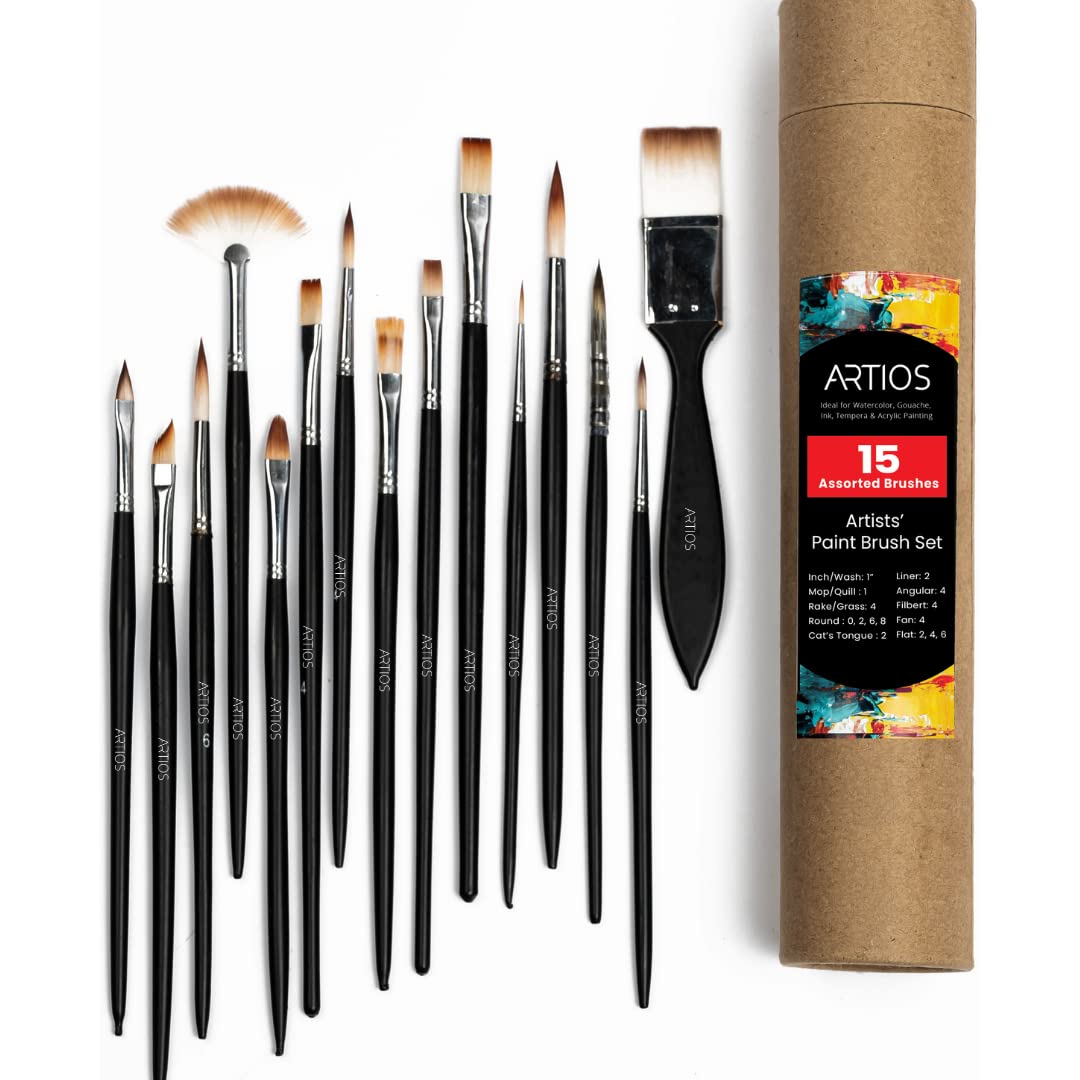
Browse the ARTIOS Watercolor Supplies collection, including mop brush sets, watercolor papers, and complete watercolor kits.