

Watercolor Painting: A Complete Beginner's Guide
Watercolor is magical. There's something about the way colors bloom and blend on wet paper that no other medium can replicate. It's also one of the most portable mediums. A small travel palette, some watercolor paper, and a brush or two is all you need to paint anywhere.
That said, watercolor has a reputation for being tricky. And it can be, if you fight the medium. This guide is about working with watercolor, not against it.
What Makes Watercolor Different
Unlike acrylic or oil paint, watercolor is transparent. You're not layering opaque pigment. You're allowing the white of the paper to show through the paint. This means your paper is as important as your paint. Watercolor is also water-based, so gravity, humidity, and how much water you use all affect your results. That unpredictability is part of the charm.
Essential Watercolor Supplies
Paper, the Most Important Supply

Cheap paper buckles, absorbs unevenly, and makes blending nearly impossible. Look for:
- 300 GSM or above: Heavier paper holds water without warping.
- Cold pressed: A slightly textured surface that works beautifully for most watercolor styles.
- Cotton content: 100% cotton paper is the gold standard. It absorbs and releases water evenly, gives beautiful wet-in-wet effects, and holds pigment richly. 25% cotton is a great middle ground for beginners.
- Acid-free: Your paintings won't yellow over time.

Brushes
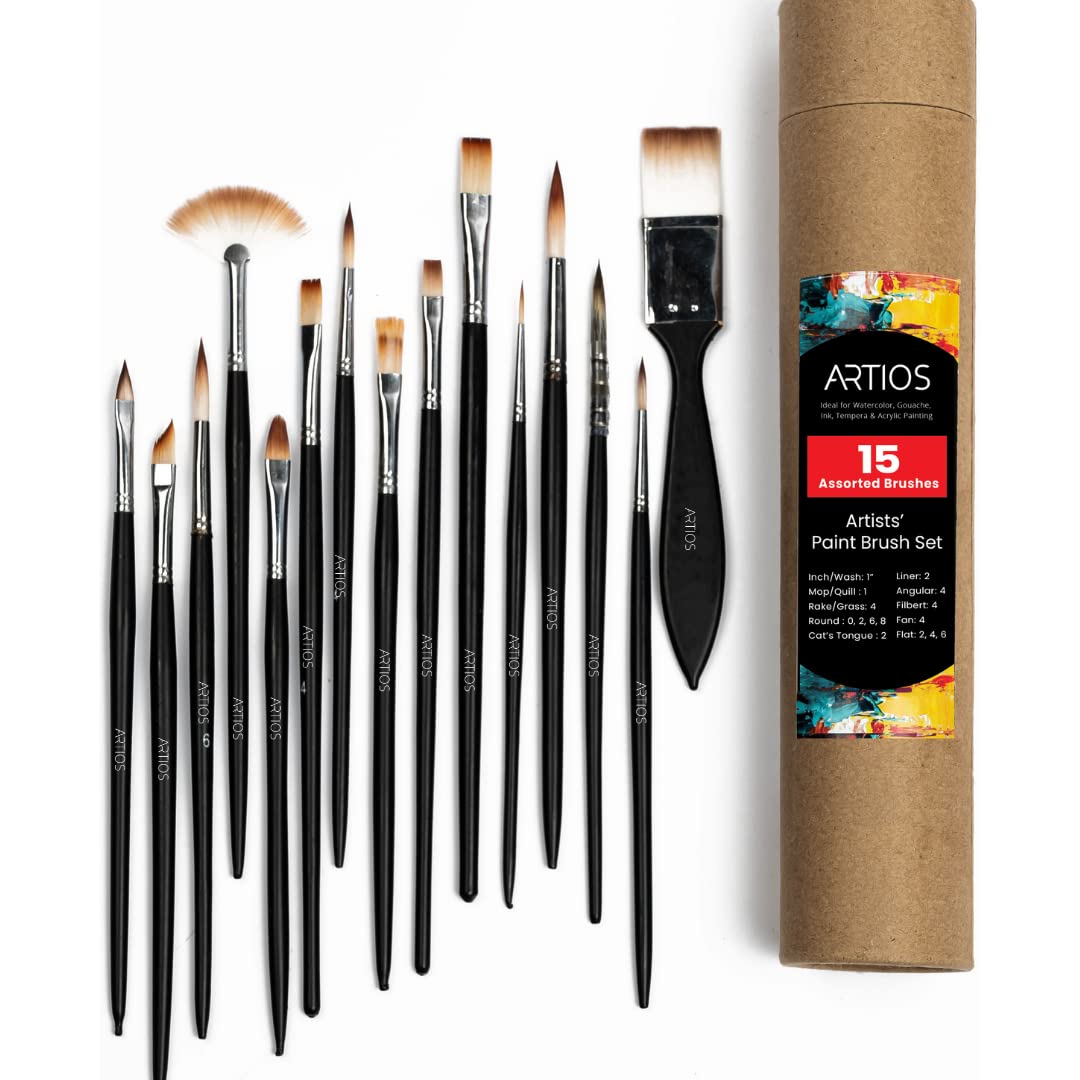
For watercolor, you want brushes that hold a lot of water. Mop brushes and large round brushes are ideal for washes. A medium round (Size 6 to 8) does most of the work. A small round (Size 0 to 2) handles detail. Three good brushes can take you very far.
Paint
Watercolor comes as pan colors (dry pressed pigment) or tubes. Pans are portable and convenient. Tubes give richer, more vibrant color and are better for large washes. Either works well.
Palette

A wooden or ceramic palette with wells to hold paint and mixing areas is ideal. Wells prevent colors from running into each other.
Core Watercolor Techniques
Wet on Wet
Wet your paper with clean water first, then drop color onto the wet surface. The paint blooms and spreads unpredictably, creating soft, dreamy edges. Great for skies, backgrounds, and flowers.
Wet on Dry
Apply wet paint to dry paper. This gives crisp, defined edges. Use this for details and areas where you need control.
Glazing (Layering)
Once a layer is completely dry, apply a thin transparent wash of another color over it. Each glaze deepens the color and adds luminosity. This is how watercolorists build up rich, complex colors.
Lifting
While paint is still wet, lift it off with a clean damp brush, a paper towel, or your finger. This creates highlights, clouds, and light effects. On 100% cotton paper, you can even lift dry paint to recover highlights.
Salt Texture
Sprinkle table salt onto wet paint. As it dries, the salt absorbs pigment in interesting star patterns. Once dry, brush it away. Beautiful for galaxy paintings, ocean textures, and abstract work.
How to Start

Don't start with a complex scene. Start with something simple, a lemon, a single flower, a landscape with just sky and hills. The goal is to learn how paint behaves on your particular paper. Do small studies: paint the same subject five different ways. Getting to know your materials is the whole point of early practice.
Common Watercolor Mistakes
- Using printer or sketch paper: These buckle immediately. Always use paper made for watercolor.
- Adding white paint to lighten colors: In watercolor, you lighten by adding more water or leaving paper white. White paint makes watercolors look chalky and flat.
- Muddy mixes: Mixing too many colors creates mud. Stick to two or three colors per mix.
- Overworking wet areas: Going back into wet paint disturbs it and creates hard marks. Let layers dry fully before reworking.
- Not enough water: Watercolor should flow freely. If it looks chalky or stiff, add more water.

If there's one thing worth investing in, it's good paper. The ARTIOS watercolor paper range includes 300 GSM cold pressed sheets in 25% cotton and 100% cotton options, in A3, A4, and A5 sizes, all acid-free and archival quality.