

Round vs Flat vs Filbert Brushes: When to Use Each
You've got your paints, you've got your canvas, and now you're staring at a row of brushes wondering what each shape actually does. Round, flat, filbert, fan, angular, mop... it's a lot. But the good news is, most of what you'll paint day to day comes down to three shapes: round, flat, and filbert.
Let's go through each one.
The Three Core Shapes at a Glance
| Shape | Appearance | Best Used For | Medium Compatibility |
|---|---|---|---|
| Round | Pointed tip, oval belly | Detail, line work, fine strokes | All mediums |
| Flat | Square-edged, even bristles | Bold strokes, blocking in, washes | Acrylics, oils, watercolor |
| Filbert | Flat but with rounded edges | Blending, petal/leaf shapes, portraits | Acrylics, oils |
Round Brushes
Round brushes are probably the first thing you picture when you think of a paintbrush. They have a round or oval belly that tapers to a point at the tip. The size of the brush determines how much paint it holds and what kind of marks it makes.

Small round brushes (sizes 0 to 4) are your detail tools. They're what you use for fine lines, outlines, facial features, text, and any work that requires precision. Larger round brushes (size 8 and above) can lay down broader strokes while still allowing some detail work with the tip.
In watercolor, round brushes are arguably the most important shape because they hold a lot of water and release it gradually, giving you control over your washes.
Use a round brush when: You need control, fine lines, or detail work in any medium.
Flat Brushes
Flat brushes have square ends with bristles that are the same length across the width. They're built for coverage. You can use the broad face of the brush for filling large areas quickly, and you can turn the brush on its edge for straight lines and fine strokes.

Flat brushes are excellent for blocking in base colors, painting skies or backgrounds, and working with thick, impasto paint. They give you crisp, clean edges when you use them on their sides.
One useful variation is the angular flat (sometimes called a "cat's tongue") where the bristles are cut at an angle. This gives you curved strokes on one side and a straight edge on the other, which is useful for painting curves, leaves, and architectural details.
Use a flat brush when: You're covering large areas, blocking in color, or need clean straight edges.
Filbert Brushes
Filbert brushes are a hybrid. They're flat in structure, but the tip is shaped like an oval or the end of a finger. This rounded end makes them incredibly versatile.

The filbert is often called the "portrait painter's brush" because the rounded tip makes it natural for curved shapes: cheeks, lips, petals, leaves, waves. It blends beautifully and doesn't leave the harsh square marks that a flat brush can.
Use a filbert brush when: You're painting portraits, flowers, any curved organic shapes, or blending.
Other Shapes Worth Knowing
Once you've got the three core shapes down, here are a few others that become useful as you develop:
- Fan brush: Spread-out bristles in a fan shape. Good for dry-brushing textures, foliage, and grassy effects.
- Mop brush: A large, fluffy round brush with very soft bristles. Excellent for watercolor washes and covering large areas with a lot of water.
- Liner / Rigger: A very thin, long round brush. Designed for long, fine continuous lines like rigging on ships, branches, or signatures.

What Should a Beginner Buy?
If you're just starting out, a set that includes a few rounds (sizes 2, 6, 10 roughly), a couple of flats, and a filbert or two will cover 90% of what you need. You don't need every shape before you start painting.
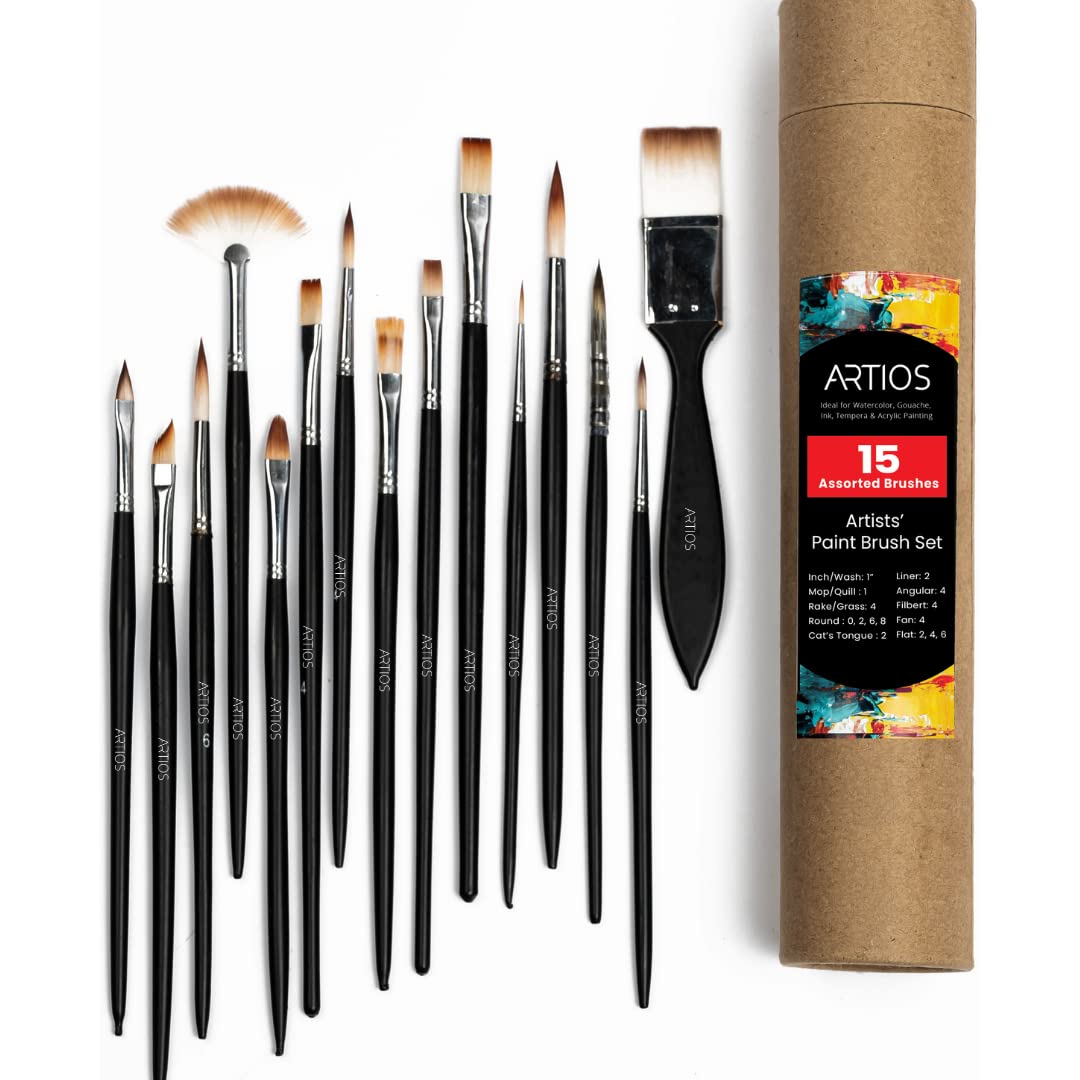
Our ARTIOS brush range includes beginner-friendly sets that give you a good mix of shapes to start with, as well as individual brushes if you want to try specific shapes. All brushes have premium wooden handles for a comfortable grip.
For more on what to look for when choosing brushes, see: How to Choose the Right Paint Brushes.