

How to Store Brushes, Paper and Canvas During the Monsoon
Share
During the monsoon, keep art supplies dry, off the floor and in air that moves. Brushes should be fully dry before they go into any case, paper should be sealed flat with silica gel, and canvas should stand away from outside walls. Most monsoon damage comes from moisture that gets trapped, so the fix is mostly about airflow and a few cheap habits.
Humidity in many Indian cities stays above 80% for weeks at a time between June and September. Here is what that does to each type of supply and how to prevent it.
What Humidity Does to Art Supplies
Moisture in the air gets absorbed by anything made from plant fiber or wood. Paper, canvas, brush handles and wooden palettes all take on water slowly and give it up slowly. When that moisture sits in a dark, closed space, mold follows. You will usually see it first as small gray, green or brown spots, or smell it as a musty odor when you open a drawer.
The other problem is shape. Paper cockles and curls, canvas loosens, and wooden handles swell. Some of this reverses when the air dries out, but mold stains and loose ferrules do not.
Brushes
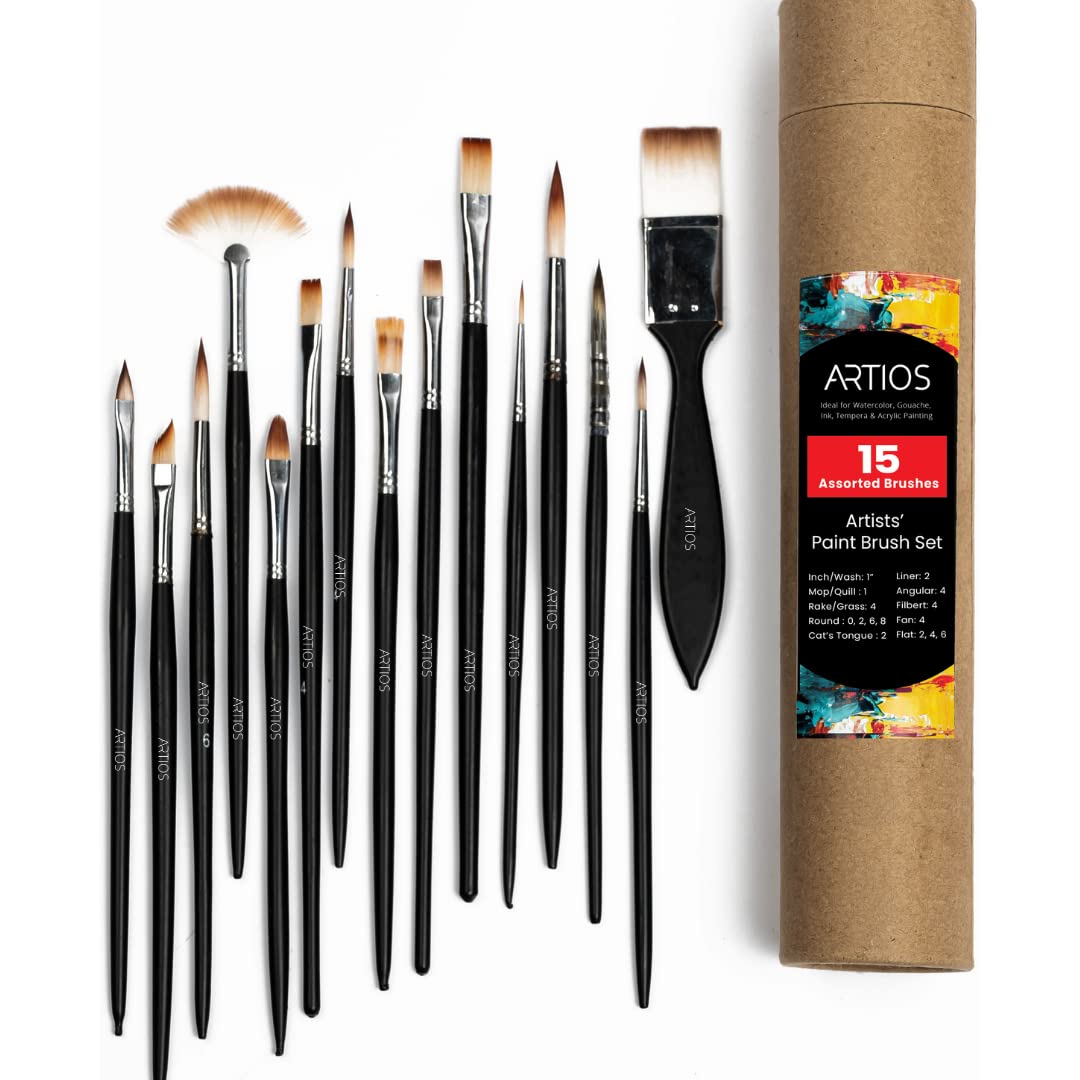
Brushes are at most risk right after you paint. A brush packed away damp in a closed tube or pouch can grow mildew in the bristles within days in monsoon weather, and water sitting inside the ferrule weakens the glue that holds the bristles in place.
- Rinse thoroughly, squeeze out excess water with a clean cloth, and reshape the tip.
- Dry brushes lying flat or standing bristles up in an open jar. Never dry them bristles down, since water runs into the ferrule.
- Give them longer than usual. In dry months a brush may dry in a couple of hours. In the monsoon, leave it overnight, ideally under a ceiling fan.
- Only put brushes back into a roll or tube when the bristles feel completely dry at the base, where they meet the metal.
- Wipe wooden handles dry after each session. Swelling and cracked paint on handles usually starts from repeated wet hands.
Synthetic bristles absorb far less water than natural hair, which helps, but the ferrule and handle behave the same either way. Our brush cleaning and care guide covers the washing routine itself.
Paper
Paper is the most sensitive item in any studio. Damp paper cockles, loses its flatness, and in bad cases develops foxing, the small brown spots caused by mold and moisture. Watercolor paper also has sizing that controls how it absorbs water, and paper that has soaked up humidity for weeks can take paint more unevenly.
- Keep paper in its original packaging until you need it, then reseal it.
- Store packs flat inside a large zip-lock bag or a plastic storage box with a lid. Add two or three silica gel sachets and replace or dry them out every couple of weeks.
- Keep the box off the floor and away from exterior walls, bathrooms and kitchens, which are the dampest spots in most homes.
- Store sheets flat. Paper stored rolled or on its edge sets into a curve that is hard to undo in humid weather.
- Let a painted sheet dry fully before stacking anything on it. Interleave finished work with plain paper.
Acid-free paper resists yellowing over time, but it is not mold-proof. Dry storage still matters. For more on paper types, see Understanding Art Papers.
Canvas and Canvas Boards
Canvas is woven fabric, and cotton canvas absorbs moisture readily. Stretched canvas can sag when humid and tighten again when dry. Canvas boards stay flatter, but the board itself can warp if it sits against a damp wall.
- Store blank canvases upright with a small gap between each one, or flat on a shelf with a sheet of paper between boards.
- Never lean canvas against an outside wall during the rains. Moisture comes through the plaster and into the back of the canvas.
- Give acrylic paintings longer to cure before you stack or wrap them. The surface can feel dry while the paint underneath is still soft, and it will stick to whatever touches it.
- If you see mold on the back of a canvas, take it outside, brush it off with a dry soft brush, and let it sit in sunlight for an hour. Then move it to a drier spot.
If you are choosing between formats, Canvas Boards vs Stretched Canvas explains the practical differences.
Monsoon Storage at a Glance
| Item | What goes wrong | What to do |
|---|---|---|
| Brushes | Mildew in bristles, loose ferrules, swollen handles | Dry fully, bristles up, before packing away |
| Paper | Cockling, foxing, uneven absorbency | Sealed box, flat, with silica gel |
| Canvas | Sagging, warping, mold on the back | Upright with gaps, away from outside walls |
| Wooden palettes and easels | Swelling, mold in joints | Wipe dry after use, keep in a ventilated spot |
| Paints | Watercolor pans stay tacky, mold in palettes left wet | Leave the palette open to dry before closing it |
Setting Up the Room
You do not need a special studio. A few changes to where and how you keep things go a long way.
Pick an inside wall in the driest room you have. A room that has air conditioning for part of the day is ideal, since AC pulls moisture out of the air. If you run a dehumidifier anywhere in the house, keep your art supplies in that room. Otherwise, a ceiling fan running for a few hours a day keeps air moving and stops pockets of damp air settling in cupboards.
Open storage boxes and drawers once a week on a dry afternoon. Checking regularly means you catch a spot of mold early, before it spreads through a whole pack of paper. For layout ideas, see How to Set Up a Home Art Studio in India.
Frequently Asked Questions
Can I still paint watercolor during the monsoon?
Yes. Washes dry more slowly, so give each layer more time and use a fan if you need to speed things up. Slower drying can actually help with soft wet-on-wet work.
How do I remove mold from watercolor paper?
Light surface mold on blank paper can sometimes be brushed off outdoors once the sheet is fully dry, but stains usually remain. Use affected sheets for practice and move the rest of the pack to drier storage.
Is silica gel safe to keep with art supplies?
Yes. Keep the sachets sealed and out of reach of children and pets. Many can be dried out in sunlight or a low oven and reused.
Should I store brushes in their original tube?
Only once they are completely dry. A tube is good protection for the tips but traps moisture if a brush goes in damp.
When you are ready to restock after the rains, the ARTIOS Papers collection has watercolor, cotton and mixed media sheets for the season ahead.