
Synthetic vs Natural Hair Brushes: Which Should You Buy?
Walk into any art store and you'll see two types of brushes: synthetic and natural hair. Natural hair brushes are often priced significantly higher, which leads a lot of beginners to wonder, "Is it actually worth spending more on natural hair brushes, or is this just marketing?"
The honest answer: it depends on what you're painting with.
What's the Difference?
| Feature | Synthetic Brushes | Natural Hair Brushes |
|---|---|---|
| Material | Nylon or polyester filaments | Animal hair (sable, hog, squirrel, goat) |
| Water retention | Low to moderate | High (especially squirrel and sable) |
| Springiness | High | Low to moderate |
| Best for | Acrylics, oils, detail work | Watercolors, gouache, washes |
| Durability | High | Moderate (requires more care) |
| Price | Affordable | Expensive |
| Cruelty-free | Yes | No |
Synthetic Brushes
Synthetic brushes are made from nylon or polyester filaments. They're tough, springy, and easy to clean. The spring (or snap) in the bristles makes them excellent for pushing paint around, which is exactly what you need when working with acrylics or oils.

Modern synthetic brushes have come a long way. High-quality synthetics can mimic the feel of natural hair closely enough that many professional artists use them exclusively. They're also a good choice if you care about not using animal products.
Ideal for: Acrylic painting, oil painting, detail brushwork, any medium where springiness helps control
Natural Hair Brushes
Natural hair brushes are made from animal hair, most commonly sable (red squirrel or weasel), hog bristle, squirrel, or goat. Each type has different characteristics, but the common thread is water retention.
Natural hair has a microscopic structure that holds water (and therefore paint) much better than synthetic filaments. This is what makes a kolinsky sable brush special for watercolors: it holds a large belly of paint and releases it gradually, giving you those long, flowing strokes that are hard to replicate with synthetics.

Ideal for: Watercolors, gouache, ink washes, any technique requiring high water and paint retention
The Watercolor Exception
For most painting tasks, synthetic brushes are perfectly fine, and in many cases better. But watercolor is the one area where natural hair has a genuine technical advantage.
The key property is "snap" vs "belly." A good watercolor brush needs a large water-holding capacity (belly) while still returning to a fine point when you lift the brush. Natural squirrel and sable brushes do this naturally. Synthetics often struggle to match this combination.
That said, many synthetic brushes made specifically for watercolor (labeled "golden taklon" or "pro-grade synthetic") are quite good and significantly more affordable.
What About Hog Bristle?
Hog bristle brushes are a special case. They're stiff and springy, almost like natural synthetics. They're the traditional choice for oil painting where you want to move thick paint with force. For acrylics, they work well too but can leave more visible brushstrokes.
For Beginners: Start with Synthetics
If you're just starting out, go with a good set of synthetic brushes. They're more durable, easier to clean, and far more affordable. Once you get comfortable with your medium and technique, you can invest in specific natural hair brushes for specific needs, like a squirrel mop brush for watercolor washes.

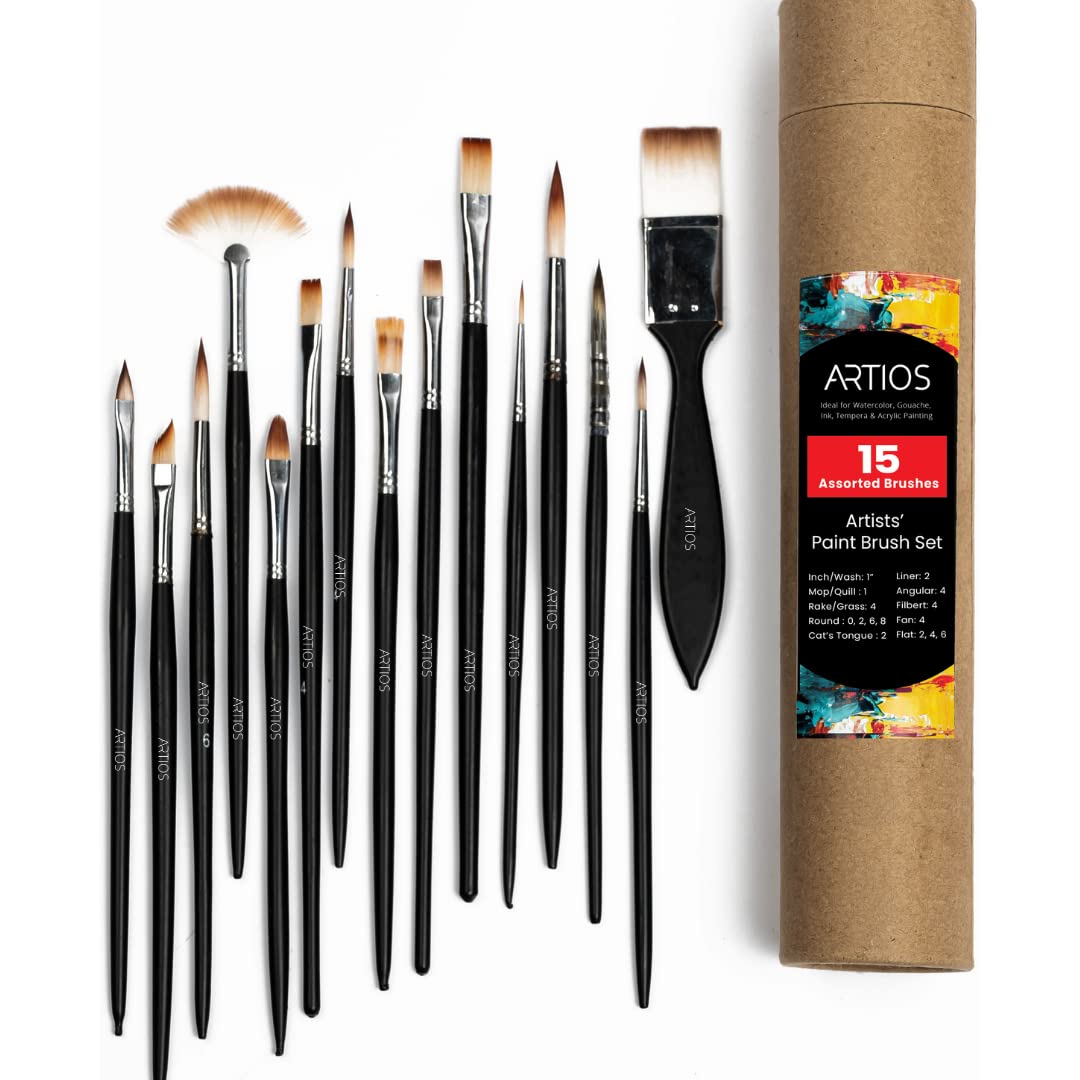
Our ARTIOS brush range covers everything from beginner sets to specialized brushes. All ARTIOS brushes use premium wooden handles and quality bristles that give you good performance at a price that makes sense for students and hobbyists.
Want to know which brush shapes to use for which techniques? Read our full guide: How to Choose the Right Paint Brushes.