

What Size Canvas Board Should a Beginner Use?
Share
For most beginners, 8x10 inches is the best canvas board size to start with. It is big enough to hold a simple landscape or still life with room for your brush, and small enough to finish in one sitting. Keep a few smaller boards, such as 6x8 or 4x4, for color tests and quick practice.
Why Small Boards Work Better at First
New painters often buy large canvases because they look impressive. Then the first painting stalls halfway, because covering a big surface takes a lot of paint, a lot of time and bigger brushes than most beginner sets include. A half-finished 16x20 is discouraging. A finished 8x10 teaches you far more.
Small boards help in a few specific ways:
- You finish paintings. Every finished piece teaches you something about composition, color and when to stop.
- You use less paint. Student tubes last much longer on small boards.
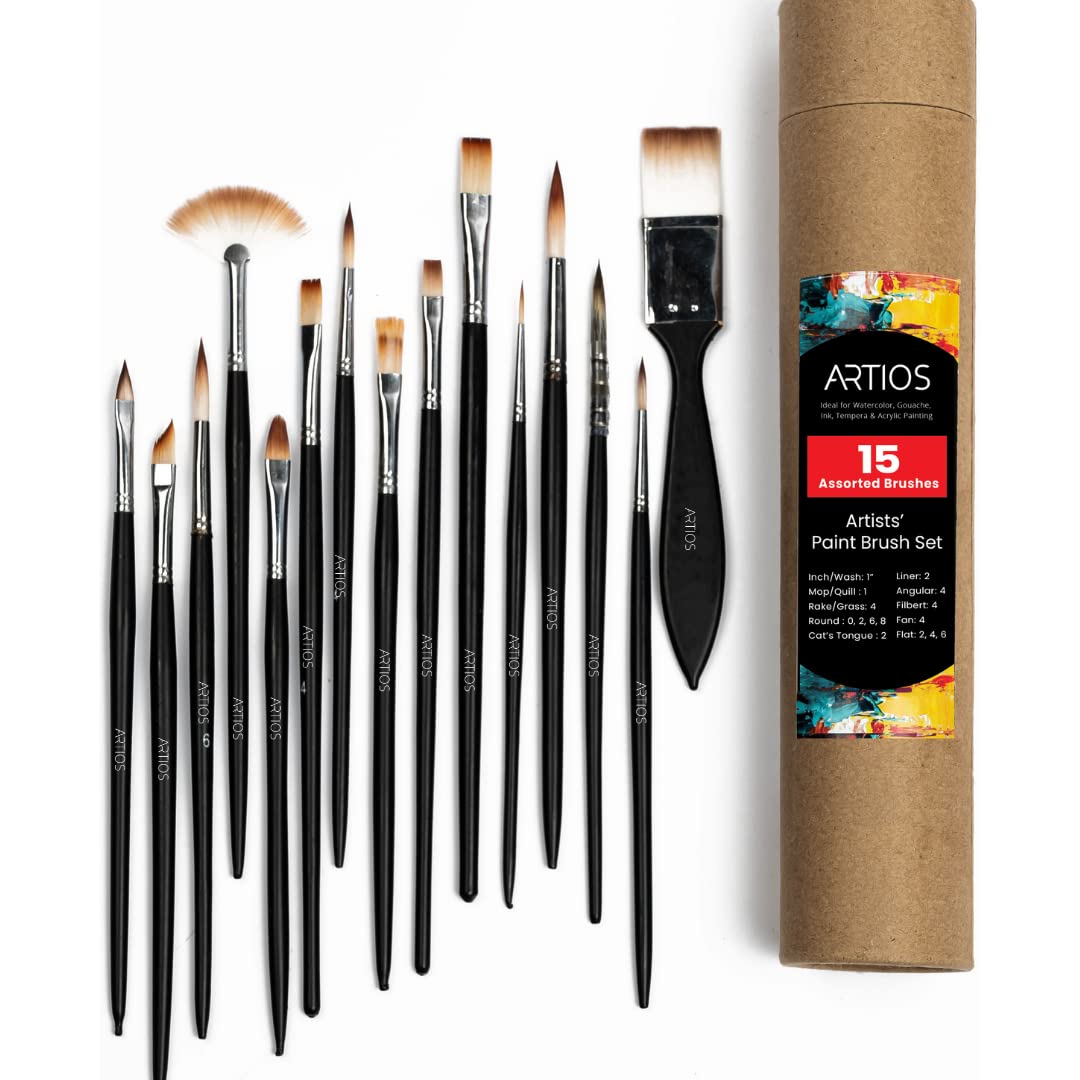
- Your brushes fit the surface. Sizes 2 to 10 in round and flat, the range in most beginner sets, are in proportion to an 8x10.
- Mistakes cost less. You can try a technique on a 4x4 and move on if it does not work.
What Each Size Is Good For
| Size (inches) | Best for | Typical time |
|---|---|---|
| 4x4 | Color swatches, mixing tests, tiny studies, gifts and small decor | 15 to 30 minutes |
| 6x8 | Daily practice, simple skies and seascapes, a single fruit or flower | 30 minutes to an hour |
| 8x10 | First complete paintings: landscapes, still life, simple animals | One to two hours |
| 10x12 | Paintings with more detail or several objects, pieces you plan to frame | Two hours or more, often two sessions |
| 12x16 and up | Once you are comfortable finishing smaller work | Several sessions |
The times are rough and assume acrylics. Your pace will change with the subject and how much detail you add.
A Simple Plan for Your First Month
Buying boards in a mix of sizes works better than buying ten of one size. Here is a practical split:
- A few 4x4 boards for mixing exercises. Paint one board with a value scale from white to black, one with a color wheel, and a few with simple gradients.
- Several 6x8 boards for short daily studies. A sky, a sunset, a single mango. Keep them loose and quick.
- A handful of 8x10 boards for your weekend paintings, the ones you plan and take time over.
- One or two 10x12 boards for when a subject needs more room.
ARTIOS canvas boards come in 4x4, 6x8, 8x10 and 10x12, in packs of 5, 10, 20 or 40, so you can build this mix without overbuying any one size. They are 100% cotton, double primed and acid-free with a medium grain.
Which Paints Suit Canvas Boards
Canvas boards are made for acrylic and oil, and they also take mixed media and pencil sketching well. Acrylic is the easier start for most people at home: it dries fast, cleans up with water and has no strong smell, which matters in a small flat with the windows shut during the monsoon. Watercolor does not behave well on primed canvas, since the paint sits on top instead of soaking in. For watercolor, stick to watercolor paper.
Match the Size to the Subject
Some subjects need space. A busy street scene or a group portrait crammed onto a 6x8 turns into a mess of tiny marks. Other subjects suit a small board, like a single cup, a pebble or a patch of sky.
A good rule: if you would need a size 0 brush for most of the painting, the board is too small for the subject. Either simplify the subject or go up a size.
Orientation matters too. Most canvas boards can be turned either way. Use landscape orientation for wide scenes like fields and beaches, and portrait orientation for tall subjects like trees, people and flowers in a vase. If you want a first subject that suits an 8x10 turned sideways, How to Paint a Simple Landscape Step by Step walks through one.
Framing and Displaying Your Work
Size also decides how easy a painting is to frame. Standard sizes like 8x10 and 10x12 are easy to match with ready-made frames from a local framer or a stationery shop, so a finished painting can go on the wall the same week. Odd sizes often need a custom frame, which takes longer and costs more.
Small boards also make good gifts. A 4x4 or 6x8 painting fits on a desk or a bookshelf, and it looks finished on a small tabletop display easel without any frame at all. Many beginners find that giving away small paintings is what keeps them painting every week.
Space, Easels and Storage
In a small apartment, board size also comes down to where you paint and where the finished work goes. Boards up to 10x12 sit comfortably on a tabletop easel at a desk. They also stack flat in a drawer or on a shelf, which is a big advantage over stretched canvas when you are painting several a week. If you are unsure which surface to buy at all, read Canvas Boards vs Stretched Canvas.
Frequently Asked Questions
Is 8x10 too small for a real painting?
No. Plenty of professional painters sell 8x10 work. The size suits focused subjects and looks good framed on a small wall.
Do I need to prime canvas boards before painting?
Primed boards can be painted on straight away. Some painters add an extra coat of gesso for a smoother surface. How to Prime a Canvas Board for Acrylics explains when it helps.
What size should a child start with?
6x8 or 8x10. Very small boards are fiddly for young hands, and large ones take too long to hold their attention.
When should I move to bigger canvases?
When you regularly finish 8x10 and 10x12 paintings and start feeling cramped. Moving up a size also means moving up in brush size.
If you are new to acrylics, the Complete Guide to Acrylic Painting for Beginners is a good next read. When you are ready to stock up, browse the ARTIOS canvas panels collection for single-size packs and mixed combos.