

Fan Brush Techniques: Grass, Foliage and Texture
Share
A fan brush is the quickest way to paint grass, tree foliage, hair-like texture and soft blends, because its spread bristles lay down many thin marks in one stroke. The trick is to use very little paint, keep the brush fairly dry and let the bristle tips do the work. Below are the strokes that do most of the work, plus the mistakes that make fan brush marks look fake.
What a Fan Brush Actually Does
The bristles on a fan brush are spread flat in a half circle and thinned out, so there are gaps between them. When you touch the tips to the surface, each clump of bristles leaves its own mark. That is why one tap can give you twenty blades of grass, and why the same brush dragged sideways gives a streaky texture that reads as bark, water ripples or wood grain.
It is a poor brush for flat, even color. If you try to fill an area with it, you get stripes. Use a flat or a round for coverage and bring the fan in once the base layer is down. If you are still sorting out which shape does what, Round vs Flat vs Filbert Brushes covers the everyday shapes.
Loading the Brush
Most bad fan brush marks come from too much paint. A loaded fan closes up, the bristles stick together and you get a blob instead of a spray of lines.
- With acrylics, pick up paint on the very tips only. Tap the brush once on the palette to spread the bristles back out.
- Keep the brush slightly damp, never wet. Blot it on a cloth after rinsing. Water between the bristles makes them clump.
- With watercolor, use a thicker mix than you would for a wash, closer to cream than to tea, and blot the heel of the brush on tissue.
- Load two colors if you want variation, for example a dark green on one side of the fan and a yellow green on the other.
Grass
Hold the brush vertically with the fan edge facing the ground line. Start at the base of the grass and flick upward in short, quick strokes, lifting off as you go so the tips taper. Work from the back of the field to the front.
A few things make grass look right:
- Go darker at the bottom. Lay a darker green or brown along the base first, then flick lighter greens up from it.
- Change the angle. Tilt your wrist slightly left for some strokes and right for others. Real grass never grows in one direction.
- Vary the height. Short marks in the distance, taller ones in the foreground.
- Finish with a liner. Pull a handful of single blades with a liner brush over the top. It breaks up the repeated fan pattern.
Tree Foliage and Bushes
For leafy masses, stop flicking and start tapping. Hold the fan flat or at a slight angle to the canvas and press the tips down lightly, then lift. Each tap leaves a cluster of small marks that reads as leaves from a distance.
- Block in the tree shape with a dark, flat color using a round or flat brush.
- With the fan, tap in a mid green over the dark, leaving gaps so the shadow shows through.
- Tap a light green only on the side the light is coming from.
- Add a few touches of the lightest color at the top edges.
Rotate the brush between taps. If every tap is at the same angle, you get a regular pattern that looks printed. For pine trees, hold the fan vertically, touch the center line and pull down and out on each side, getting wider as you go down the trunk.
Texture: Bark, Water, Hair and Fur
Drag a nearly dry fan brush in one direction to get parallel streaks. This one stroke covers a lot of subjects:
- Bark and wood: drag vertically on a tree trunk with a lighter color over a darker base. Let it skip over the surface texture.
- Water: drag horizontally with a very light touch to put reflections and ripple lines on a lake. Keep strokes straight and level.
- Hair and fur: follow the direction the hair grows, in short overlapping strokes, and build up from dark to light.
- Clouds: a clean, dry fan swept lightly over wet paint softens cloud edges without muddying them.
Soft Blending
A clean, dry fan brush is a good blender for acrylics while they are still wet. Paint two colors side by side, then sweep the fan back and forth across the join with almost no pressure. The thin bristles move only the top of the paint, so the edge softens without the colors turning gray. Wipe the brush on a cloth every few strokes so you are not dragging one color into the other.
Which Size Fan to Use
| Fan size | Good for | Canvas size |
|---|---|---|
| 2 and 4 | Distant grass, small bushes, fur on small animals | Small boards and paper up to about A4 |
| 6 | Foreground grass, tree foliage, water streaks | Most beginner canvas boards |
| 8 and 10 | Large trees, big fields, blending skies | Larger canvases |
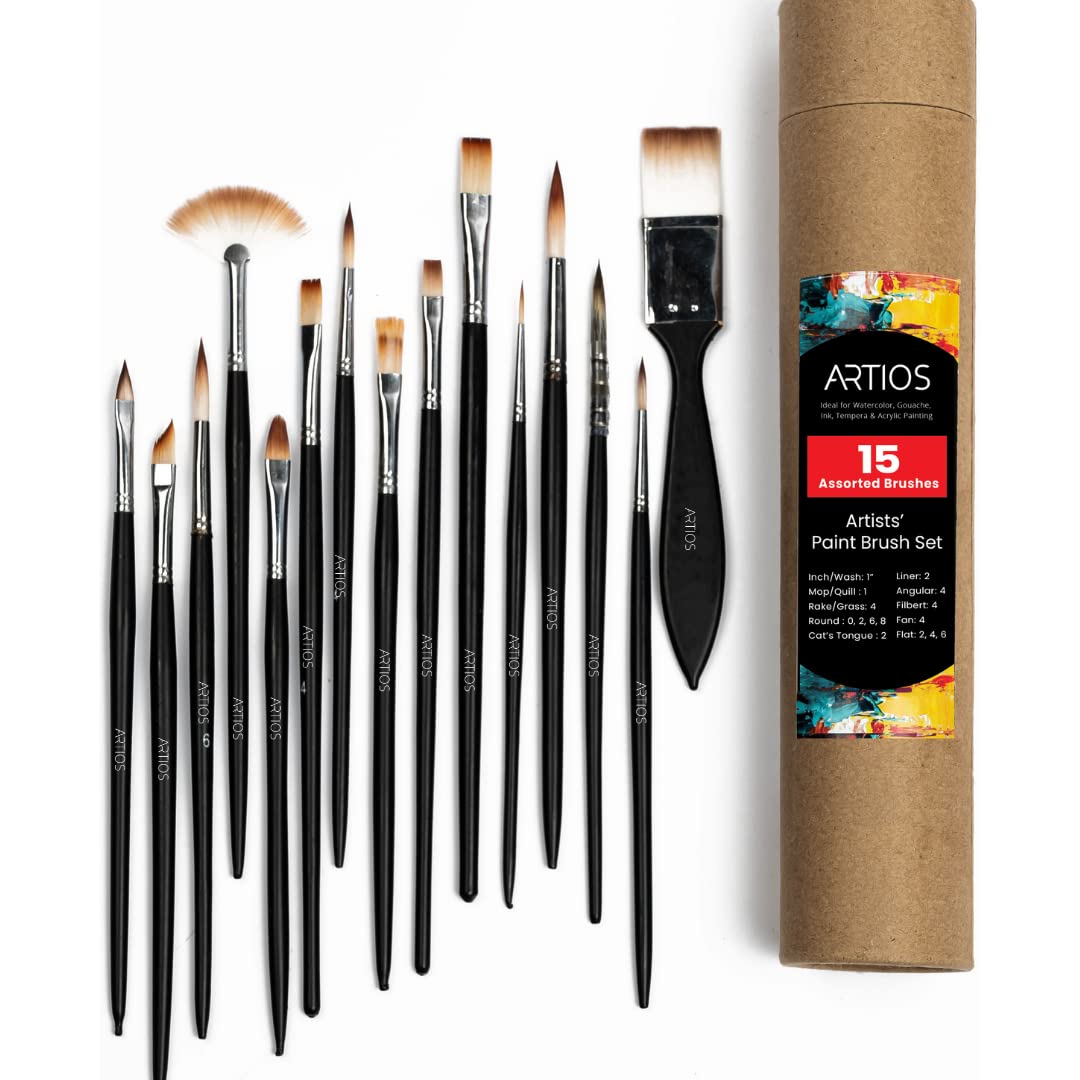
If you only buy one, a size 4 or 6 handles most landscape work on a small board. The ARTIOS fan brushes come in sizes 2, 4, 6, 8 and 10, either as a set of five or one at a time.
Common Mistakes
- Too much pressure. Pressing hard squashes the fan into a flat brush. Use the tips only.
- Too much fan. A whole field done in fan strokes looks like wallpaper. Mix it with plain brushwork.
- Same color everywhere. Use at least two values of green for grass and foliage, often more.
- Painting on wet paint when you want crisp marks. For sharp grass and leaves, let the layer below dry first.
For a full painting that puts these strokes to use, try How to Paint a Simple Landscape Step by Step.
Frequently Asked Questions
Can I use a fan brush with watercolor?
Yes. It works well for dry-brush grass and texture. Use a thicker mix and blot the brush first, or the marks will bleed into each other.
How do I stop my fan brush from clumping?
Use less paint and less water. If it clumps mid-painting, rinse it, blot it well and tap it on the palette to open the bristles again.
How do I clean a fan brush?
Rinse it straight after use, work mild soap in gently along the bristles, rinse again and reshape the fan with your fingers before it dries flat. More detail is in How to Clean and Care for Paint Brushes.
Is a fan brush worth buying as a beginner?
If you paint landscapes, yes. It saves a lot of time on grass and trees. For portraits or still life, you can wait until you need it.
You can find fan brushes along with round, flat, filbert and other shapes in the ARTIOS individual paint brushes collection, so you can add just the sizes you need.