

Liner and Rigger Brushes: What They Are For and How to Use Them
Share
Liner and rigger brushes are long, thin round brushes made for painting long, even lines in a single stroke. Use them for tree branches, grass, rigging on boats, lettering, whiskers and outlines. The trick is thin paint, a full load and a light, steady pull.
They look almost identical in a shop, and the names get mixed up a lot. Here is how they differ and how to get clean lines from them.
What Is a Liner Brush?
A liner is a round brush with bristles noticeably longer and thinner than a standard round of the same size. The longer bristles hold a reservoir of paint, so you can draw a line several centimeters long without stopping to reload. The fine point keeps that line narrow and consistent.
Liners are used across watercolor, acrylic and gouache. Sign painters and lettering artists use them for script, and illustrators use them for outlines and hair.
What Is a Rigger Brush?
A rigger is a liner taken further, with even longer bristles. The name comes from marine painters, who used it to paint the ropes and rigging on sailing ships. Those lines needed to be long, thin and slightly irregular, like real rope under tension.
Because the bristles are so long, a rigger holds more paint and flexes more. That flex makes it wobble if you are tense, and it rewards a loose, relaxed hand with lines that taper and curve naturally. Landscape painters love it for bare winter branches and tall grass.
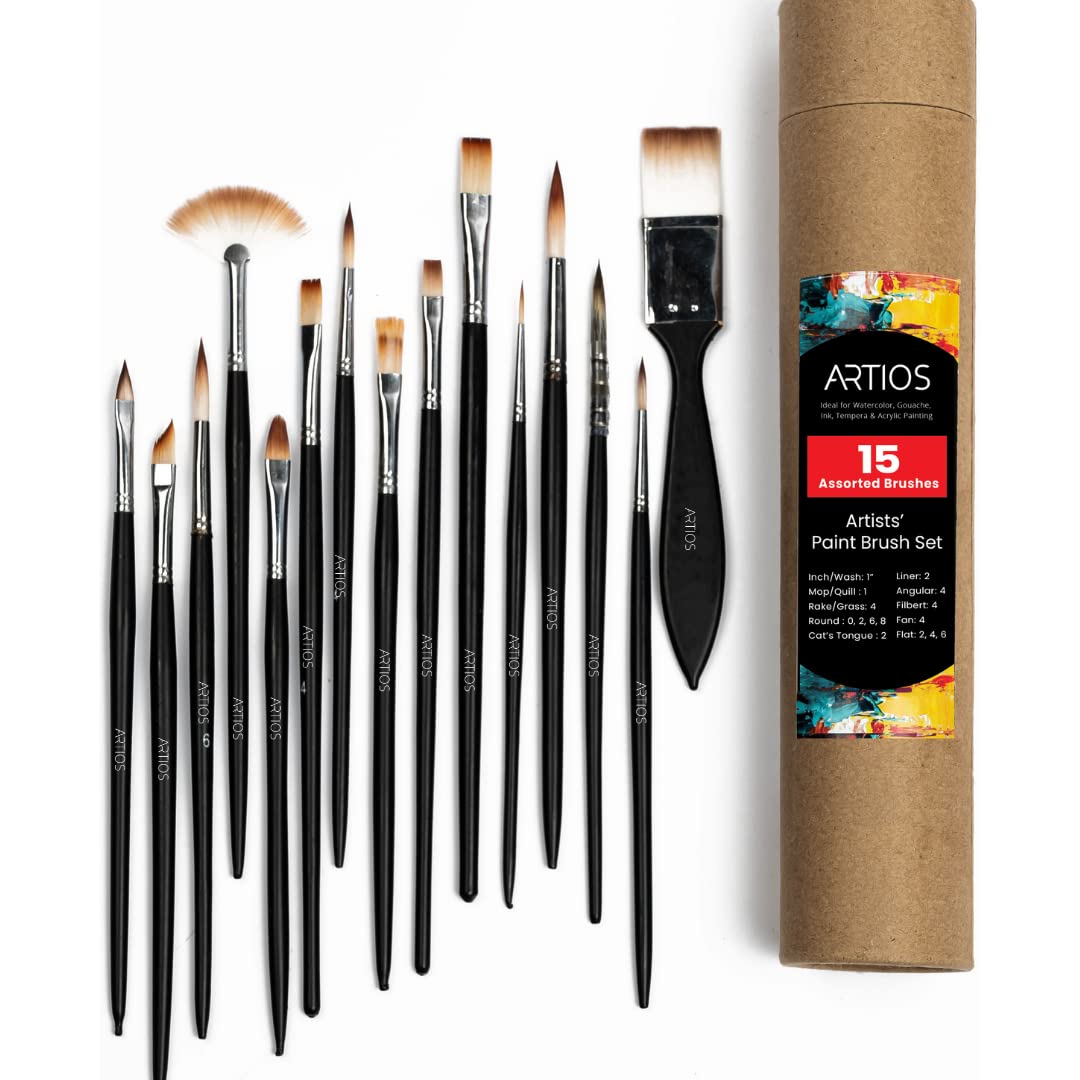
Some sets combine both. Our Long Liner and Rigger Set of 4 comes in sizes 000, 00, 0 and 1.
Liner vs Rigger vs Detail Round
| Brush | Bristle length | Best at | Harder for |
|---|---|---|---|
| Detail round or spotter | Short | Dots, eyes, tiny highlights, precise short marks | Long lines, which run dry quickly |
| Liner | Long | Outlines, lettering, stems, controlled long lines | Very loose, organic lines |
| Rigger | Very long | Branches, grass, rope, hair, tapering lines | Short precise marks and dots |
If you paint miniatures or very small detail, a short detail brush usually suits you better. See Miniature Painting for Beginners for that side of fine work.
How to Use a Liner or Rigger
Thin the paint
This matters more than anything else. Paint for a liner should flow like ink. With acrylic, add water until the mix runs off a palette knife in a thin stream. With watercolor, mix a strong but fluid puddle. Thick paint drags, breaks up and leaves the bristles clumped.
Load the whole brush
Roll the brush in the paint until the bristles are loaded right up to the ferrule. Then roll it once on the edge of the palette to bring it back to a point. A half-loaded rigger runs dry partway through a branch, which is exactly when you do not want to stop.
Hold it further back
Grip the handle near the middle or the end, the way you might hold a chopstick loosely. Holding it close to the ferrule makes your lines stiff. A looser grip lets the long bristles do the work.
Pull, do not push
Always drag the brush in the direction the handle is trailing. Pushing the bristles forward makes them splay and skip. For a vertical line, start at the top and pull down, or turn the paper so you are pulling towards yourself.
Control thickness with pressure
Press slightly for a thicker line and lift up onto the tip for a fine one. For tree branches, start with more pressure where the branch joins the trunk and lift gradually as you move outward. Rolling the handle between your fingers as you go adds natural kinks and turns.
Keep moving
Hesitation leaves blobs. Move at a steady speed, a bit faster than feels comfortable at first. A slightly wobbly confident line looks better than a slow careful one.
A Short Practice Routine
Spend ten minutes on these before using a rigger in a real painting:
- Fill a sheet with parallel straight lines, pulling from top to bottom, and try to keep them the same thickness.
- Paint lines that start thick and end in a fine taper.
- Draw a simple bare tree, starting from the trunk and branching outward, lifting pressure as the branches thin.
- Write your name in joined script without lifting the brush between letters.
Use cheap paper for this. The point is to learn how much paint the brush holds and how it responds to pressure.
Choosing a Size
Liner and rigger sizes run small. Sizes like 000 (also written 3/0) and 00 (2/0) are the finest, and sizes 0 and 1 give slightly thicker lines with more paint capacity. If you are buying just one, a size 0 or 1 is the most versatile for landscapes. The finer sizes suit lettering, whiskers and small illustration work.
If you already own a set and just need a replacement, our individual liner brushes come in sizes 3/0, 2/0, 0 and 1. For a wider look at brush shapes, read How to Choose the Right Paint Brushes.
Caring for Long Bristles
Long, fine bristles bend easily and lose their point if mistreated. Rinse the brush straight after use, especially with acrylic, which dries fast and hardens at the base of the bristles. Reshape the tip with your fingers and store the brush flat or upright, never resting on its bristles. The full routine is in How to Clean and Care for Paint Brushes.
Frequently Asked Questions
What is the difference between a liner and a rigger?
A rigger has longer bristles than a liner. Both paint long thin lines, but the rigger holds more paint and gives looser, more flexible lines, while the liner is easier to control.
Can I use a liner brush for watercolor and acrylic?
Yes. Synthetic liners work with watercolor, acrylic and gouache. Thin acrylic well and clean the brush promptly.
Why do my rigger lines break up?
Usually the paint is too thick or the brush is not fully loaded. Add more water to the mix and load the bristles all the way to the ferrule.
Which size liner should a beginner buy?
A size 0 or 1. It is fine enough for branches and stems and holds enough paint to practice long lines comfortably.
You can find liners, detail brushes and other shapes sold one at a time in the ARTIOS Individual Paint Brushes collection.