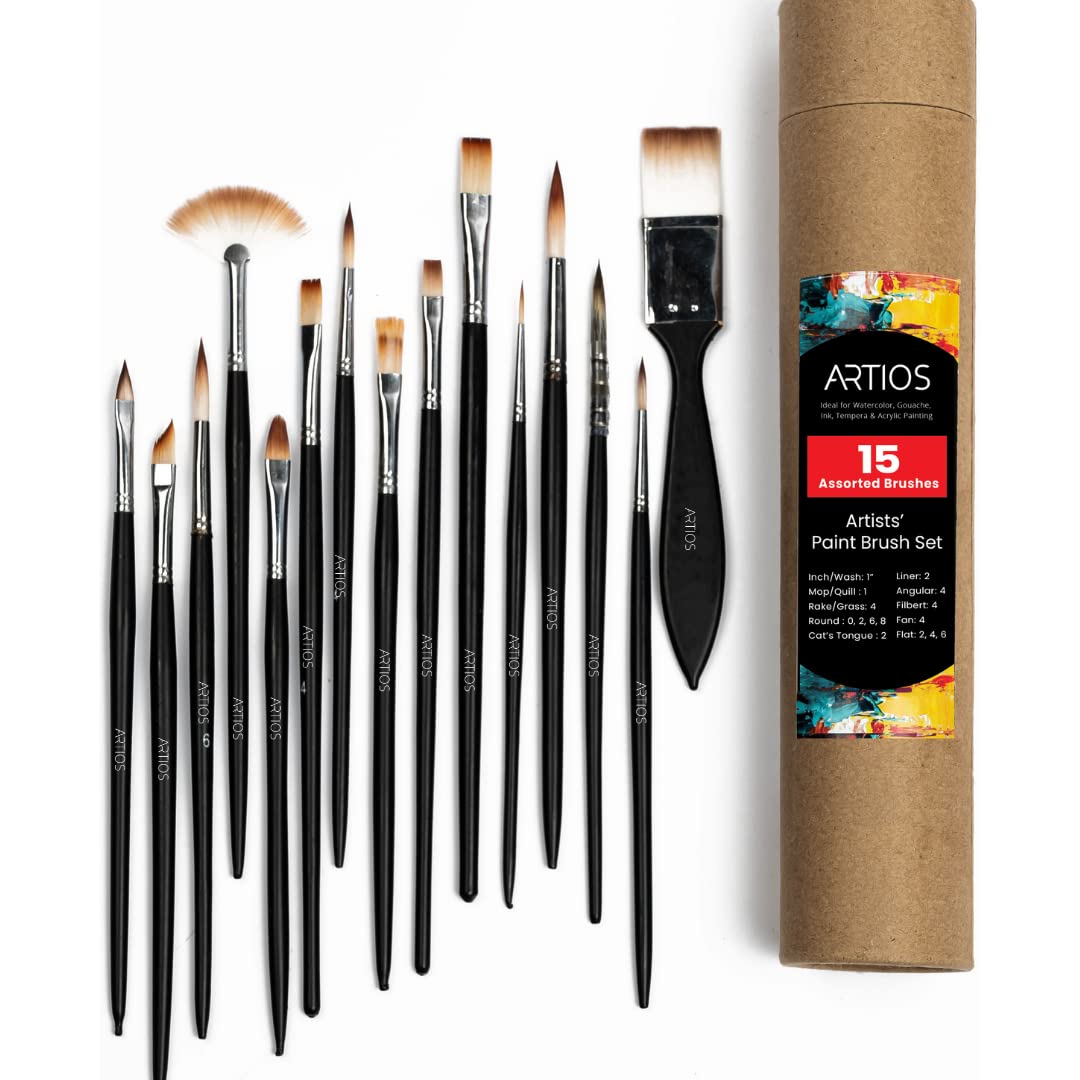


Paint Brush Sizes Explained: What the Numbers Mean
Share
The number on a paint brush tells you its size within that brand's range: a higher number means a wider, larger brush, and numbers like 2/0 or 3/0 mean sizes smaller than 0. The numbers are not standard between brands, so a size 6 from one maker can differ from another's. Flat wash and hake brushes are usually measured in inches instead.
How the Numbering System Works
Most round, flat, filbert, angular and fan brushes run on a numbered scale that starts at 0 and goes up in steps, usually even numbers after 2: 0, 1, 2, 4, 6, 8, 10, 12 and so on. Each step up gives a wider head with more bristles, which holds more paint and covers more area per stroke.
Below 0, the scale runs the other way. Sizes are written as 2/0, 3/0, 5/0 and so on, sometimes as 00 or 000. The bigger the number before the slash, the smaller the brush. A 3/0 is smaller than a 2/0, which is smaller than a 0. These tiny sizes are for liners, detailers and miniature work.
What the number measures is loosely tied to the width of the bristle head or the diameter of the ferrule, the metal part that holds the bristles. There is no single rule that every maker follows, which is why sizes vary between brands.
Where to Find the Size
The size is almost always printed on the handle, just above the ferrule, next to the brand name and sometimes a series number. On cheaper brushes the print can rub off after a few months of washing. If you rely on a particular size, mark the handle end with a dot of nail polish or a strip of tape so you can pick it out of the jar without squinting.
Brush sets usually list the sizes on the box. It is worth checking before you buy, since two sets of seven brushes can cover very different ranges. One might run from 0 to 12, another from 2 to 8 with no fine detail brush at all.
Why a Size 6 Is Not Always a Size 6
Because there is no shared standard, two size 6 rounds from different companies can look quite different. Brushes made for watercolor also tend to be fuller than brushes made for acrylic or oil at the same number. Even within one brand, a size 6 round and a size 6 flat are different shapes, so they will not cover the same area.
In practice this means:
- When replacing a brush you liked, buy the same brand and range if you can.
- When following a tutorial, treat the size as a guide and match the brush to what you see on screen.
- When buying online, check the product photos for scale if they are shown.
Inch Sizes: Wash and Hake Brushes
Wide flat brushes used for washes, backgrounds and varnishing are usually sold by the width of the head in inches, such as 1 inch, 1.5 inch or 2 inch. That measurement is more reliable than the numbered scale, since a 1 inch brush is roughly 1 inch wide from any maker. The ARTIOS flat wash brushes come in 1, 1.5 and 2 inch sizes.
What Each Size Range Is Used For
| Size range | Typical use | Common shapes |
|---|---|---|
| 3/0 to 0 | Fine lines, eyelashes, whiskers, lettering, miniature painting | Liner, round, spotter |
| 1 to 4 | Details, small shapes, edges and highlights | Round, flat, filbert, angular |
| 6 to 8 | General painting: most of the work on a small or medium canvas | Round, flat, filbert, fan |
| 10 to 12 | Blocking in large areas, backgrounds, skies | Flat, round, fan |
| 1 to 2 inch | Washes, wetting paper, priming, varnishing | Flat wash, hake |
How Sizes Look Across One Range
It helps to see how one brand spreads its sizes across shapes. In the ARTIOS individual brushes:
- Round: 0, 1, 2, 4, 6, 8 and 10
- Flat: 0, 2, 4, 6, 8, 10 and 12
- Filbert, angular and fan: 2, 4, 6, 8 and 10
- Mop: 0, 2, 4 and 8
- Petal: 0, 1 and 2
- Liner: 3/0, 2/0, 0 and 1
Specialty shapes like petal and liner have short ranges. They do one job, so you only need a few sizes. Rounds and flats cover the widest range because you use them for everything from details to backgrounds.
Choosing Sizes for Your Canvas
The size you need depends mostly on the size of your surface. A useful rule is to paint with the largest brush that still gives you the control you need for that part of the painting. Beginners tend to do the reverse and fiddle with a size 2 on a whole sky, which leaves streaks and takes forever.
- A4 paper or 8x10 board: sizes 2 to 8 do most of the work, with a 0 for details.
- Larger canvases: move up to 8, 10 and 12, and add a 1 inch flat for backgrounds.
- Miniatures and small studies: 3/0 to 2 do almost everything. See Miniature Painting for Beginners for more.
If you are deciding which specific brushes to buy first, Individual Paint Brushes vs Brush Sets lists good starting sizes for each shape. For the shapes themselves, read Round vs Flat vs Filbert Brushes.
Frequently Asked Questions
Is a size 0 the smallest brush?
No. Sizes like 2/0, 3/0 and smaller go below 0. They are used for fine lines and miniature detail.
What is the difference between 00 and 2/0?
They mean the same size. Some brands write the number of zeros, others use the slash format.
Does brush length change with size?
The bristle head gets longer and wider as the size goes up. Handle length depends more on the style of brush, with long handles common for easel painting and short handles for desk work.
Are watercolor and acrylic brush sizes the same?
They use the same numbering. Watercolor brushes are often fuller at the same number so they hold more water, which means a watercolor size 6 can feel a size larger than an acrylic one.
Browse every shape and size in the ARTIOS individual paint brushes collection and pick exactly the numbers you need.